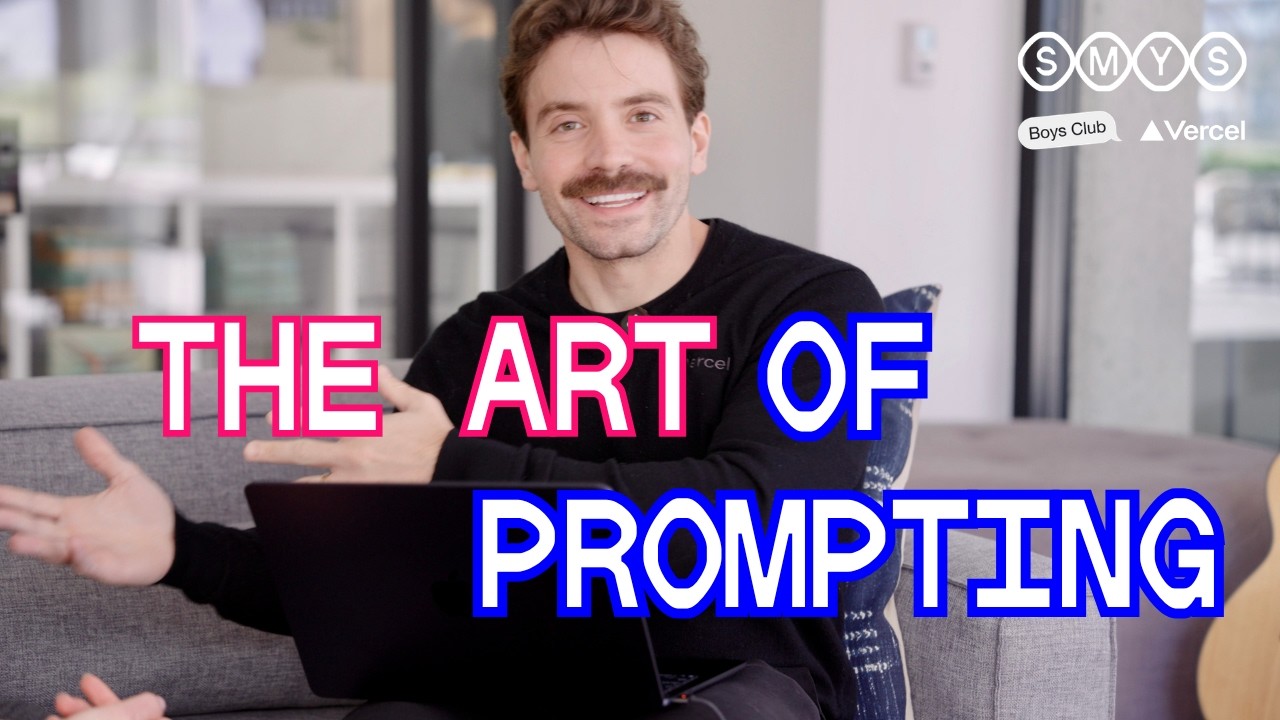
Guillermo Rauch, founder and CEO of Vercel, discusses his daily tech stack, his philosophy on AI and agents, and how he balances deep technical involvement with running a major developer platform.
He sees strong parallels between the current AI boom and the early mobile/cloud era, arguing that developers must reconfigure their thinking toward agentic interfaces — natural language and conversation — just as they once had to rethink for mobile.
Vercel recently launched a chat SDK to help developers build agents with interfaces on messaging platforms like WhatsApp and Telegram, signaling a shift from traditional UIs to conversational, agent-driven experiences.
Trust but Verify: Hands-On with Technology
Rauch emphasizes a “trust but verify” mindset toward new tools and frameworks.
He doesn’t take claims at face value — he tests technologies himself, often pretending to be a novice user.
He uses AI agents to scale this verification, sending them out to explore and validate how tools are actually used in the wild.
He admits he doesn’t fully trust AI outputs and always checks the final product before sharing or shipping.
Daily Stack: Raycast, Claude, and Internal Agents
His core daily tools include:
Raycast with AI integration (triggered via Command+Shift+Space) for quick actions.
Claude Code for terminal-based automation.
v0, Vercel’s internal AI agent (soon to be renamed), which he uses extensively for building, research, and communication.
He still uses Vim and nano for quick edits, especially when working with images or giving fast prompts to teams.
How He Uses v0 Day-to-Day
Weekly business analysis: Every Monday, v0 generates a “brain dump” report analyzing key platform metrics — total requests, compute usage, token consumption — and identifies trends.
Email triage: He’s moving away from traditional email interfaces like Superhuman due to rising spam from AI-generated messages (a problem he attributes to tools like OpenClaw).
Slack automation: He uses v0 to summarize actions and send updates to colleagues via Slack, though he still writes most messages himself.
Internal documentation redesign: When he had a clear vision for improving Vercel’s docs, he prompted v0 to generate a new version in just two iterations — faster and more effective than unstructured feedback in meetings or Slack.
Building with v0: Prompting as Collaboration
Rauch treats prompting as a collaborative, iterative process — not just giving orders, but inviting the agent to improve his ideas.
Example: He asked v0 to “fix my ideas” and prompted it to create 20 video game–themed progress bars — some of which were original suggestions from the agent.
He believes in “a little ego death”: don’t over-polish your initial idea; let the agent augment it.
He tracks his daily keystroke count as a proxy for productivity, though he jokes that February’s data was “fake” due to limited tracking — except for Feb 26, his “hottest day” (which he calls the “Coachella of coding”).
Agent Research and Quality Control
When launching new features like Vercel Queues, he uses agents to:
Compare documentation against competitors.
Generate comparison dimensions.
Create visually polished outputs for social media.
Before posting, he runs a “consortium of agents” to critique the work, then validates with human teammates.
His rule: “I will always, always, always check.”
Internal Tools: Timeless and Custom Workflows
Vercel builds many tools internally that never ship publicly, to avoid adding noise to an already crowded ecosystem.
Example: Timeless — an app that lets him press a command to capture the last few seconds of screen recording when he spots a bug, making it easy to document issues for teammates.
Non-Digital Stack and Cognitive Tradeoffs
Physical habit: He uses Peloton heavily due to time constraints, joking that even his “non-digital” tool is digital.
Task management: He tries to memorize top priorities rather than write them down — if something is truly important, it should stay top of mind.
He acknowledges concerns about cognitive deterioration from AI reliance:
Memory may decline due to offloading to tools.
More critically, deep thinking skills may weaken from disuse.
But he sees a tradeoff: AI enables massive task diversification and delegation, which he views as a net positive.