-
Carl Hughes
- Background and origin story
- Studied mechanical engineering with a business minor, initially planned to work for large corporations, completed internships at GE and other large multinational companies.
- Found corporate work boring, inspired by entrepreneur father and uncle who ran small local businesses with flexible lifestyles.
- Taught himself to code in free time, picked up freelance WordPress gigs on the side.
- Moved to Chicago post-grad, worked at small company uloop for two years, then served as the first engineer at packback for four years.
- Left packback to join early-stage startup The Grade Network, where he worked for three years before the pandemic hit, forcing him into entrepreneurship.
- Pivotal moments and turning points
- Gained foundational startup experience as the first employee at two early-stage startups, learning hiring, fundraising, and operations firsthand, which built his confidence to found his own business.
- Launched draft.dev in 2020 as a freelance side project with no website or landing page, using a single page on his personal site called “Carl’s writing” to pitch samples to his professional network, including contacts in the previously unknown field of developer relations.
- Hit more demand than he could handle within three months of freelancing, began hiring help and phased out of his full-time job.
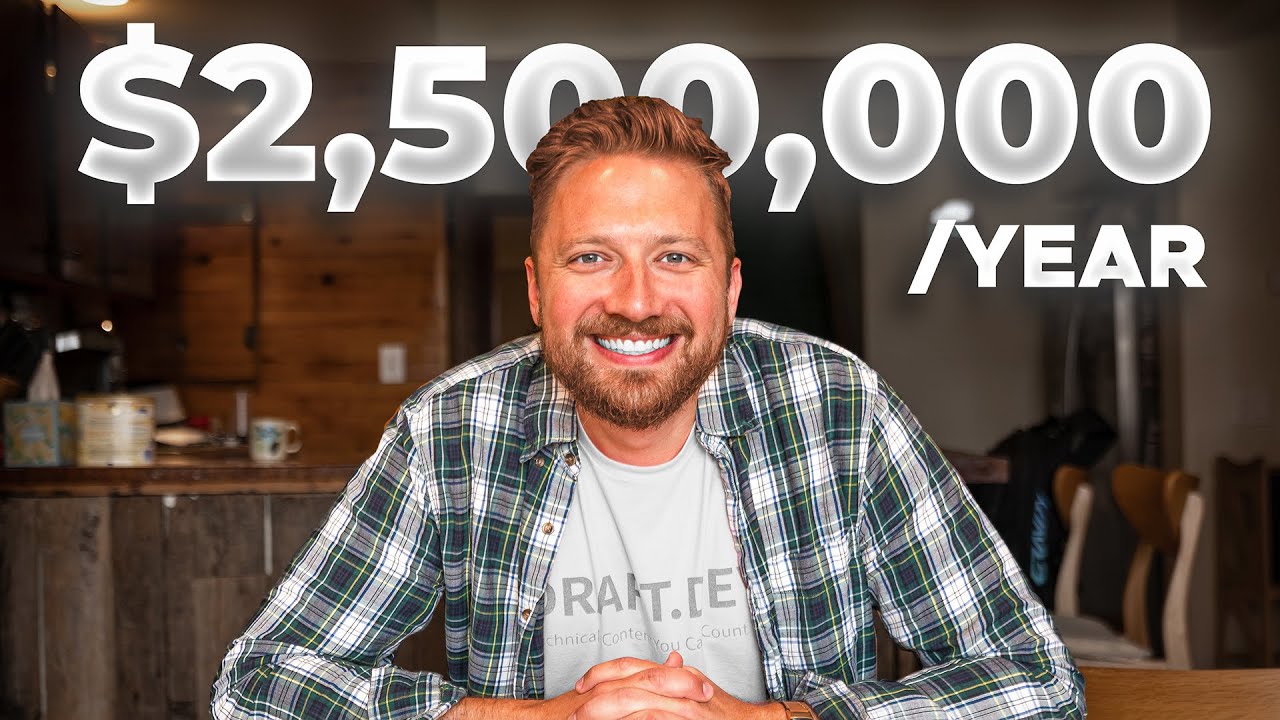
- Reached $2.5 million in annual revenue run rate within two years, grew to over $2.5 million in annual revenue within three years.
- Took a month off when his second son was born, leading to an existential crisis and discovery of entrepreneurship through acquisition (ETA).
- Partnered with a friend to raise capital, evaluated 50-100 founder-led businesses, and acquired a second company via debt, which they have run for several months.
- Business growth, current status, or exit details
- draft.dev generates over $2.5 million in annual revenue, employs 6-7 full-time staff and hundreds of contractors across 54 countries.
- Downsized draft.dev’s team slightly from its peak due to tech industry downturn and reduced VC funding, which decreased client marketing budgets.
- Runs a second acquired business with a partner, with a 10-year goal to reach $100 million in total revenue across acquired businesses without launching new ventures.
- Plans to complete additional acquisitions every few years to scale revenue.
- Background and origin story
-
Products and Offerings
- Core product(s) and what each one does
- draft.dev: Productized service that creates technical content (blog posts, tutorials) for companies targeting software developers to build authority and trust with technical audiences.
- Clients purchase packages of 12, 24, or 48 content pieces, with deliverables sent weekly or biweekly.
- Content is created by a pool of practicing software engineer contractors, edited by professional editors, then tech-reviewed by full-time engineers on staff.
- Clients include early-stage startups and large established companies like Red Panda, Cloudflare, and Dropbox, typically selling developer-focused software tools (IDEs, testing tools, security tools).
- Supporting tools, side projects, or experiments mentioned
- Maintains a personal network spreadsheet of ~50 professional contacts, with a weekly reminder to reach out to 2-3 people to stay in touch.
- Launched 24 total businesses over 7 years, with only draft.dev succeeding; 10+ documented failed side projects provided experiential learning.
- Acquired a second unnamed business via entrepreneurship through acquisition (ETA) with a partner, which they operate together.
- Core product(s) and what each one does
-
Metrics and Financials
- Revenue figures, user counts, and financial milestones
- draft.dev reached $2.5 million in annual revenue run rate within 2 years, grew to over $2.5 million in annual revenue within 3 years.
- 10-year goal to hit $100 million in total revenue across all owned businesses.
- Hundreds of contractors across 54 countries support draft.dev’s operations.
- Software costs and resource efficiency
- High per-article costs due to paying practicing software engineers for content creation, leading to a premium pricing model with no discounts.
- Exit or acquisition specifics (if explicitly stated)
- Acquired second business using debt financing, evaluated 50-100 founder-led businesses before selecting the target.
- No exit of draft.dev discussed.
- Revenue figures, user counts, and financial milestones
-
Strategy and Growth
- Overall vision and positioning
- Position draft.dev as the premium provider in the technical content niche for developer-focused companies.
- Scale total revenue to $100 million over 10 years exclusively via acquisitions, not new business launches.
- Primary growth engine or method
- Growth splits evenly into three channels: 1) Referrals and word of mouth (existing clients referring colleagues, or clients moving to new companies and bringing draft.dev along). 2) Organic search and social media (blog posts ranking for niche terms like “what does a developer advocate do”, social content driving traffic to the same assets). 3) Cold outreach and random inbound leads.
- Key tactics, channels, or strategic steps
- Requires quarterly client commitments, no one-off trials or discounts to align with high delivery costs and premium positioning.
- Niche focus on developer-specific technical content builds trust faster than generalist content agencies.
- Launched in 2020 amid the COVID-19 pandemic, as tech companies redirected cancelled in-person conference budgets to content marketing, driving demand.
- Validated draft.dev part-time while employed, ensuring viability before transitioning to full-time work.
- Uses entrepreneurship through acquisition (ETA) to skip greenfield build time, acquiring existing businesses instead of launching new ones.
- Overall vision and positioning
-
Lessons and Advice
- Direct advice given to other founders
- Find a niche that balances personal interest/passion and proven customer willingness to pay; avoid niches you like with no monetization potential, or niches you have no interest in that customers pay for (hard to differentiate).
- Maintain a small professional network (~50 people), reach out to 2-3 contacts weekly to stay in touch; this drove Carl’s last two startup jobs and draft.dev’s first customers.
- Talk to 10-12 potential customers to identify pain points with existing solutions, then build your productized service to address those gaps.
- Start a productized service in a niche you can deliver most work for yourself initially, to avoid early hiring challenges; grow into team building over time.
- Surround yourself with entrepreneurs 1 step ahead of you to build confidence; seeing founders with no more skills/education than you succeed proves entrepreneurship is achievable.
- Embrace failed side projects; 24 failed businesses over 7 years provided stacked experiential learning that contributed to draft.dev’s success.
- Validate productized services part-time first to ensure viability before going full-time, to reduce financial pressure.
- For productized services: Require long-term commitments, avoid discounting/one-off trials to maintain premium positioning.
- Consider entrepreneurship through acquisition (ETA) to scale without launching new businesses; it allows skipping years of greenfield work and can be repeated to hit large revenue goals.
- Hard-won insights and key takeaways
- Most people fail at productized services by picking a niche just because others are successful, without understanding customer needs or competitor differentiation.
- High-cost service models require long-term client commitments to remain profitable.
- Market timing (launching amid COVID-19 budget shifts) was a major factor in draft.dev’s rapid growth.
- Direct advice given to other founders