-
Andy Cloak
- Founder of Data Fetcher, a solo founder based in London
- Studied engineering at university but never loved it; taught himself to code
- Worked as a freelance React developer in London while launching side projects
- First successful side project: a TikTok influencer directory (scraping TikTok, selling data as SaaS)
- Sold the TikTok directory after it reached a few thousand dollars per month in MRR
- Used proceeds to buy time off to work on something more sustainable
- While trying to launch an IPOs newsletter, pulled financial data into Airtable to manage it
- This experience seeded the idea for Data Fetcher
-
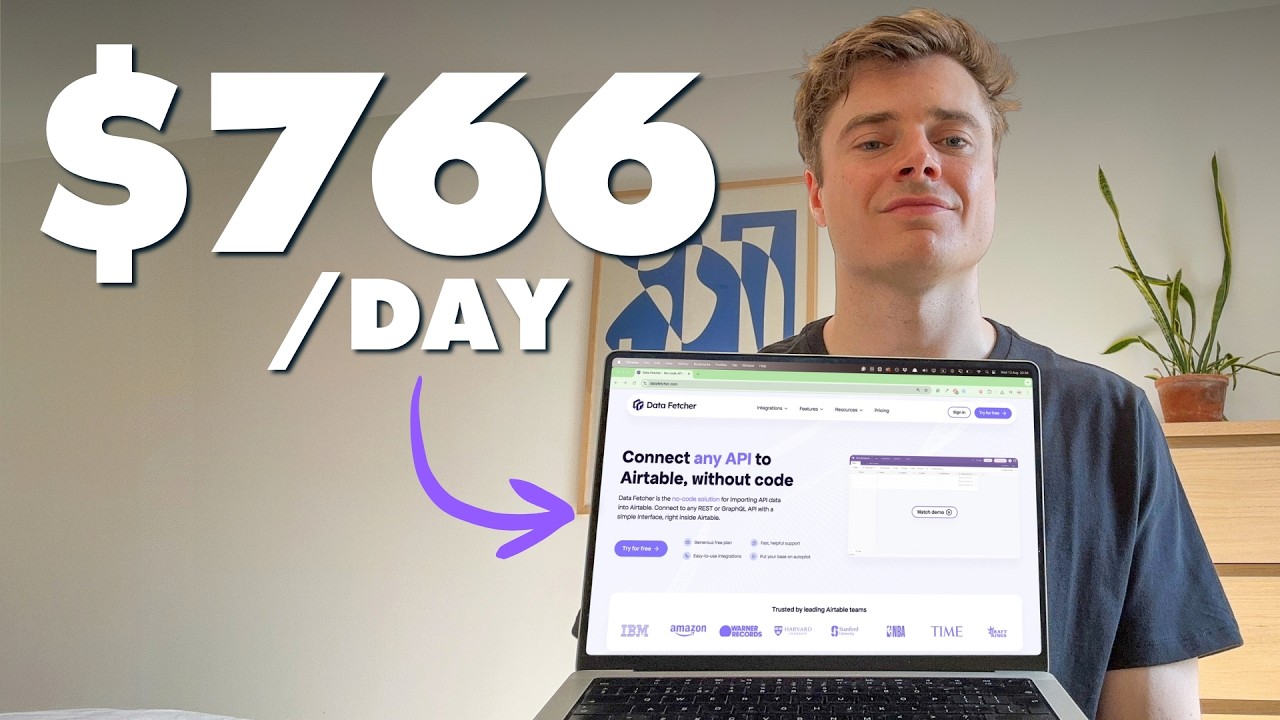
Data Fetcher
- Airtable extension that lets users connect to any other platform via APIs
- Automatically schedules data fetching into Airtable databases
- Highly flexible tool with diverse use cases: marketing data (Facebook ads, Google Analytics), operations workflows
- Continues to surprise Andy with new use cases even 5 years in
- Currently at 600 paying customers and $23,000/month recurring revenue
-
Revenue Journey
- First customer acquired after a few days (benefit of early marketplace positioning)
- 1K MRR after a few months through content marketing
- 3K MRR after one year
- 10K MRR after first year after building no-code integrations
- 20K MRR after 3 years
- Currently at 23K MRR
-
Growth Strategy
- Identified a proven add-on pattern from an established platform (API Connector for Google Sheets had 100,000 users)
- Validated the idea by checking Airtable forums for pain points
- Content marketing around popular integrations (blog posts, YouTube videos)
- Built no-code integrations to serve less technical users
- Continuous customer feedback loop: talking to users, building improvements, then telling people about it
-
Platform Opportunity Framework
- Step 1: Find a growing platform using tools like Exploding Topics
- Step 2: Find a pain point on that platform through forums, Reddit, Twitter
- Step 3: Borrow a proven add-on or pattern from a more established platform (including UX)
- Step 4: Check if you can integrate (public API, marketplace, extension SDK)
- Step 5: Do napkin maths on opportunity size (platform users, problem commonality, willingness to pay)
- Step 6: Assess platform risk—will they build this natively? Check roadmap and support forums
-
Recommended Platforms to Build On
- Notion: Still growing fast, relatively new API, opportunities in automation, reporting, and data movement
- Figma: Opportunities around exporting to Webflow, Framer, and other CMS tools
- Avoid building on ChatGPT or Claude due to extreme competition
-
Tech Stack
- Extension: TypeScript, React, Airtable extension SDK
- Backend: TypeScript, PostgreSQL, GraphQL, Node.js
- Frontend (marketing site): Next.js, Tailwind, ShadCN
- Hosting: Heroku (API, database), Hetzner (workers)
- Support: Help Scout
- Email: Fastmail, MailerLite
- Analytics: Plausible, ChartMogul
- Operations: Airtable for product roadmap and content pipeline
-
Costs and Margins
- Hosting: $2,500/month
- SaaS tools: ~$1,000/month
- Co-working space: $150/month
- Total margin: 85%
-
Lessons and Advice
- Focus over shiny objects: Wasted 6 months on side businesses when growth slowed and got bored; now uses Claude as a “business coach” to stay accountable and focused on what’s working
- Do proper user testing early and often: Spent almost a year without speaking to users; one afternoon of user interviews revealed UX issues that increased revenue, usage, and engagement almost overnight
- Platform risk is real but manageable: Airtable sits between scripting and no-code imports, making it unlikely they’ll build a direct competitor
- Benefits of building on a platform: Distribution through marketplace, qualified leads who trust platform-approved tools, perfect indie hacker opportunity size (not too big to attract funded competitors)