-
Alex
- Background and origin story:
- Both parents were entrepreneurs, knew from day one he wanted to be an entrepreneur.
- Out of college, planned to work with early-stage founders to build skills and network before launching own business.
- Worked as marketer at early-stage companies, found role required founder-level commitment with no true 9-5 schedule.
- Switched to larger company to secure true 9-5 role, allowing him to close work laptop at 5pm and focus on side hustle.
- Founded fin versus.com (branded as Finn versus Finn) in 2018 as a side hustle, business model is affiliate marketing: drives shoppers to partner brands, earns commissions on referred sales.
- First iteration of the site was a fintech comparison tool, quickly pivoted to health and wellness after noticing telemedicine companies raising $100M+ Series A rounds with no existing online content.
- Wrote first 60 articles himself while learning WordPress, initial traffic strategy was organic SEO targeting shopper queries.
- Key early innovation: partnering directly with brands instead of relying on third-party affiliate networks.
- Took 6 months to gain significant organic traffic, then began pitching partnerships to brands he was already driving traffic to, letting brands set commission rates.
- Pivotal moments and turning points:
- Identified telemedicine/telehealth as an early niche, among the first to review platforms that later became household names.
- After 1 year of operation, site revenue reached $150k, replacing his full-time salary; waited an additional year to confirm revenue stability before quitting his job.
- After 2 years full-time, bought out his business partner who preferred to keep the business as a side hustle.
- Decided to build a portfolio of niche affiliate sites to leverage economies of scale with brand partnerships.
- Started experimenting with paid advertising to diversify traffic beyond organic SEO.
- Made first hires: outsourced writing first, then hired a virtual assistant for publishing tasks, then a full-time editor, then a designer and web developer.
- Business growth, current status, or exit details:
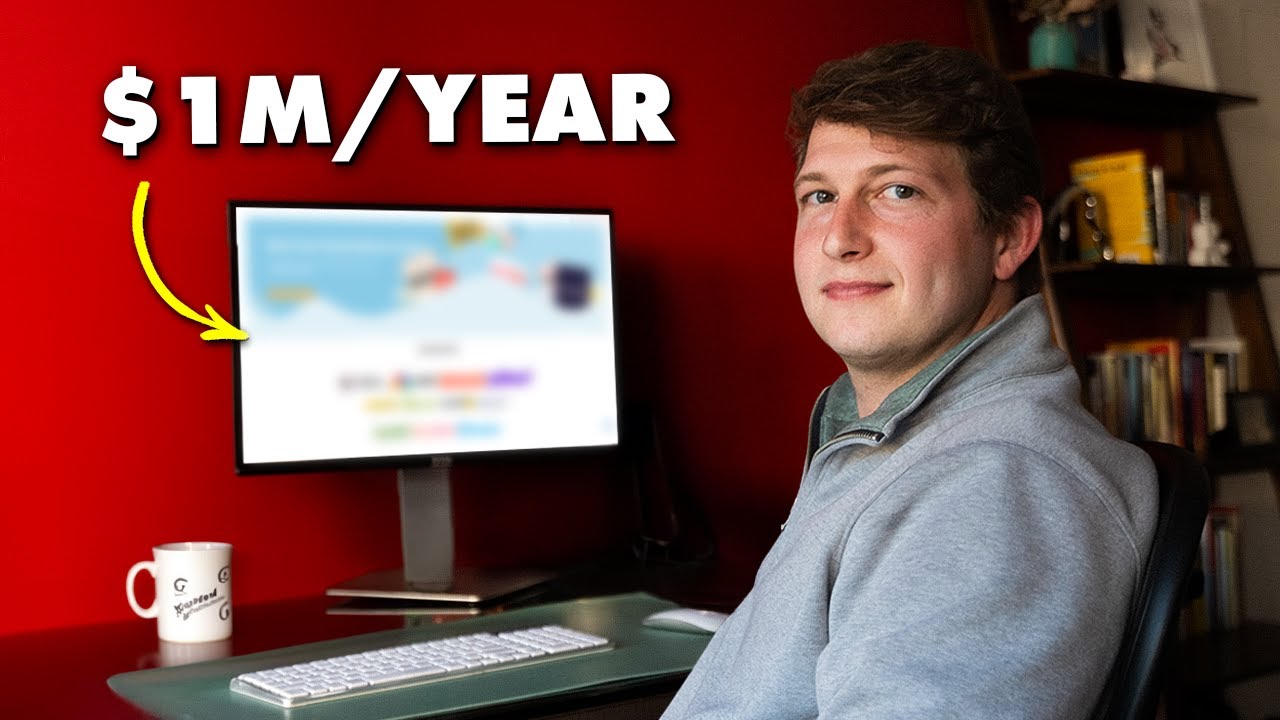
- Now a 7-figure business, generating over $1M in annual revenue.
- Portfolio includes 6 total affiliate sites.
- Operates with a distributed global team.
- Typical work day: starts ~8:30/9am, holds weekly team meetings, takes brand partnership calls, stops work ~4pm to care for his son, minimal weekend work, catches up on emails after son’s bedtime to set next-day tasks for team.
- Currently preparing to sell the business, no specific acquisition details disclosed.
- Background and origin story:
-
Products and Offerings
- Core product: fin versus.com (Finn versus Finn), a health and wellness product review and comparison site that drives shoppers to partner brands in exchange for commissions.
- Portfolio of 6 additional niche affiliate sites, each focused on narrower categories than general health/wellness to leverage brand partnerships across multiple properties.
-
Metrics and Financials
- Launched as side hustle in 2018, now generates over $1M in annual revenue.
- Replaced Alex’s $150k full-time salary after 1 year of operation.
- Took 6 months to gain significant organic traffic after launch.
- Portfolio includes 6 total affiliate sites.
-
Strategy and Growth
- Overall vision and positioning: Help shoppers make informed decisions about health and wellness purchases, monetize via direct brand partnerships.
- Primary growth engine: Organic SEO targeting low-competition longtail keywords and high-intent user queries.
- Key tactics, channels, or strategic steps:
- Niche selection: Target new, high-margin, high-momentum categories with no existing online content to avoid crowded competitive spaces early on.
- Keyword research: Focus on low-competition longtail keywords, recognize high-intent query patterns (e.g., “best X for Y”), create content that exactly matches user search intent (more in-depth or concise than existing top-ranking content).
- Direct brand partnerships: Pitch brands after driving initial traffic, let brands set commission rates, leverage partnerships across 6-site portfolio for economies of scale.
- Traffic diversification: Experiment with paid advertising campaigns, pitch test spends to partners to scale beyond SEO.
- Content maintenance: Regularly update stale content to maintain topical authority, avoid ranking drops from outdated content.
- Team building: Outsource writing, publishing, editing, design, and development work to focus on high-leverage brand partnerships.
-
Tech Stack and Infrastructure
- Built initial site on WordPress while learning the platform, wrote first 60 articles directly in WordPress.
- Runs paid media campaigns (ad platforms not specified) to diversify traffic.
- Operates with a distributed global team across multiple time zones.
-
Lessons and Advice
- Direct advice to founders:
- Just get started: Initial business plans do not need to be over-engineered, as where you start will not be where you end. No need to plan for multi-generational ownership, IPO, or exit from day one.
- Pick a broad audience, iterate on solving their problems once you gain momentum.
- Niche selection: Avoid crowded spaces early on, target queries with no existing content, ensure niches are new, high-margin, and have long-term momentum.
- SEO best practices: Target low-competition longtail keywords, match content exactly to user search intent, be first to cover new topics, create the best content on the topic (more in-depth or concise than existing top results).
- Validate stability before quitting day job: Wait until side project replaces your income, then wait an additional period to confirm revenue consistency.
- Partner selection: Find partners with matching intensity, shared vision, and complementary skills; test collaboration on small projects before formalizing partnerships.
- Content strategy: Stale content loses rankings, keep all content fresh within your lane of topical authority.
- Risk management: Do not rely solely on SEO, experiment with paid ads (accept potential failure as learning, scale successful campaigns).
- Exit planning: Clarify early if the business is a lifestyle play, long-term hold, or exit-focused; structure in-house vs. outsourced functions accordingly.
- Direct advice to founders: