-
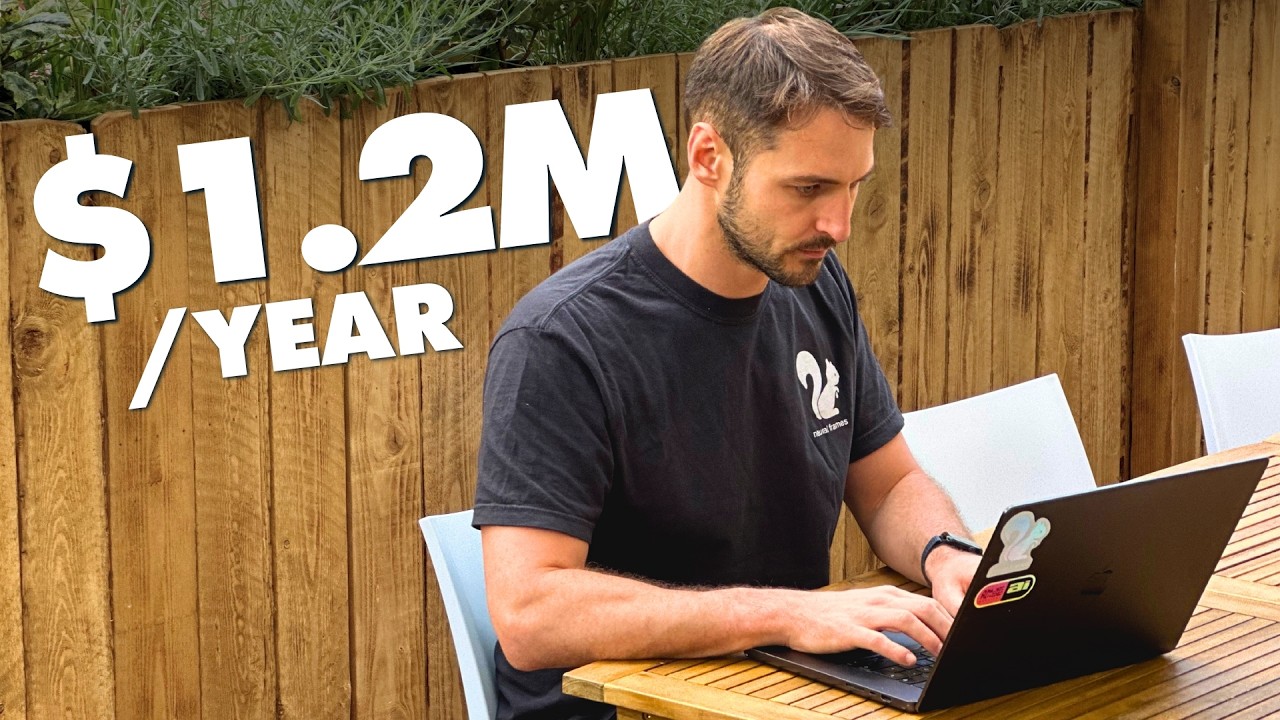
Nicolai Klemke (Nico)
- Background and origin story
- Studied physics, completed a master’s degree in 2016 and a PhD in 2020, despite early burnout with the field.
- Joined a deep tech startup post-PhD, working at the intersection of computer vision and physics, where he built AI and advanced programming skills.
- Left his traditional career path to launch Neural Frames at the end of 2022, his first full-stack software project.
- Operated as a solopreneur in the first year of business, now leads a team of five employees.
- Pivotal moments and turning points
- Identified a lack of passion for physics early on, with a desire to build products that directly impact real people.
- Combined past experience in computer vision and lifelong music involvement to land on the AI music video generator concept.
- Pivoted product positioning from generic “text to video for everyone” to a music-video-specific focus, which reduced user friction and boosted word-of-mouth.
- Launched the MVP on Hacker News one week after going live, reaching the platform’s top 6 posts, driving 350+ concurrent users, first revenue, and high-authority backlinks.
- Business growth, current status, or exit details
- Generated $100,000 in monthly revenue as of the last month.
- Grew to 1,500 paying customers and 100,000 monthly active site visitors.
- Generated 1.5 million total AI videos on the platform to date.
- Background and origin story
-
Products and Offerings
- Core product(s) and what each one does
- Neural Frames: AI music video generator that simplifies visual content creation for musicians releasing new songs.
- Serves hobbyist, indie, and professional musicians, plus creators of AI-generated music.
- Supporting tools, side projects, or experiments mentioned
- Nico experiments with side project ideas, including an AI podcast generator, an AI executive coach with calendar/Slack access, and other voice/audio interface tools.
- Core product(s) and what each one does
-
Metrics and Financials
- Revenue figures, user counts, and financial milestones
- $100,000 in monthly recurring revenue from 1,500 paying customers.
- 100,000 monthly active users (site visitors).
- 1.5 million total AI videos generated on the platform to date.
- Software costs and resource efficiency
- ~$45,000 per month for GPUs and text-to-video APIs, accounting for nearly half of monthly revenue.
- ~$5,000 per month for servers, storage, and hosting.
- ~$1,000 per month for Cursor (AI coding tool).
- Smaller recurring costs: $300/month for Email Octopus, $200/month for Slack, $120/month for post talk (analytics), $110/month for Hrefs (SEO), $100/month for Intercom.
- Revenue figures, user counts, and financial milestones
-
Strategy and Growth
- Overall vision and positioning
- Build niche, user-centric AI tools that solve specific, high-friction problems for target audiences.
- Bootstrap the business to maintain freedom to target smaller markets without VC pressure to scale to billion-dollar valuations.
- Primary growth engine or method
- SEO: Early adoption of keyword research via Hrefs, dedicated landing pages, and free tools to rank on Google.
- Personal branding: Positioned as an indie hacker/solopreneur, featured personal photo across the site, published YouTube tutorials to build user trust and connection.
- Community launch: Hacker News post in the first week of MVP launch drove initial traffic, revenue, and backlinks.
- Key tactics, channels, or strategic steps
- Niche down: Pivoted from generic “text to video for everyone” to music-video-specific positioning to reduce user cognitive load and boost referrals.
- Idea generation: Uses “find out” principle (populate multiple idea areas, then combine overlapping past experiences) plus SEO keyword validation (1,000+ monthly searches, low competition = viable idea).
- Iterative product development: Continuously improved the product based on user feedback, combined with outreach to AI communities.
- Bootstrapping benefits: Avoids VC requirements to target massive markets, enabling focus on niche problems larger companies ignore.
- Overall vision and positioning
-
Tech Stack and Infrastructure
- Tools, platforms, and technical approaches referenced
- Coding: Cursor (AI coding tool), Python (backend), Nex.js (frontend).
- AI/compute: Runpod (GPU hosting), File (text-to-video APIs), custom Telegram bot for server downtime alerts.
- Operations: Slack (communication), Linear (task tracking), Notion (internal documentation), Hrefs (SEO), Intercom (customer support), Email Octopus (newsletters), Chad GBT (general task support).
- Analytics: post talk.
- Notable technical decisions, trade-offs, or architecture choices
- Chose niche-specific positioning over generic tool approach to align with user needs and improve conversion.
- Bootstrapped infrastructure to keep costs tied to revenue, with GPU/API costs as the largest recurring expense.
- Tools, platforms, and technical approaches referenced
-
Lessons and Advice
- Direct advice given to other founders
- Don’t let fear of failure or technical challenges hold you back from career changes or building: you have nothing to lose, will gain valuable skills even if the project fails, and can return to your previous career if needed.
- Focus on solving specific user problems, not the underlying technology – users pay for solutions, not tech stack.
- Validate ideas with SEO keyword research: target terms with 1,000+ monthly searches and low competition to confirm unmet demand.
- Use AI tools to speed up building, which makes technical challenges far more manageable than in the past.
- Hard-won insights and key takeaways
- Bootstrapped companies have more operational freedom than VC-backed peers, as they can target smaller markets without pressure to hit billion-dollar valuations.
- Personal connection drives conversion: users buy from people, not faceless companies, so lean into personal branding as a founder.
- Combining past experience across unrelated fields (e.g., computer vision + music) can uncover unique, high-opportunity niches.
- Direct advice given to other founders