-
Praneeth
- Quit his $250,000 software engineering job to go all in on building his own apps
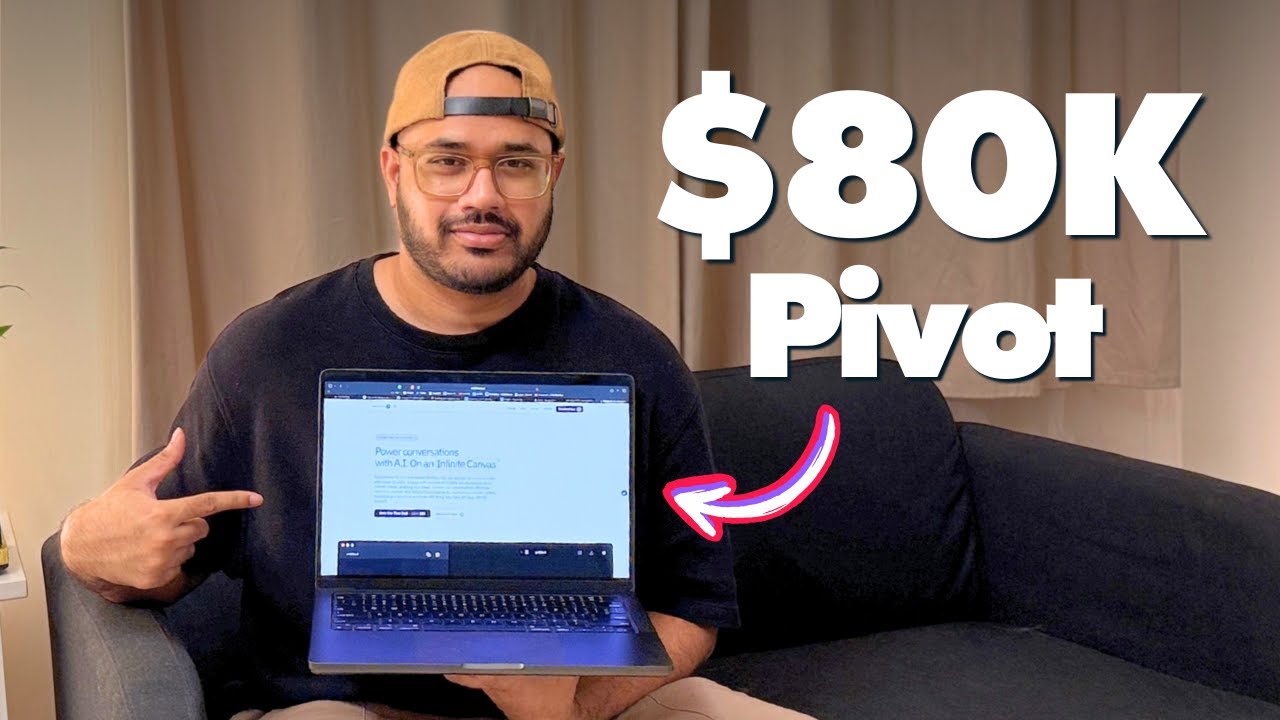
- Built an app originally called Rabbit Holes AI, later renamed Canvas Mode
- The first version of the app launched with a freemium subscription model and saw almost no traction
- Pivoted the pricing model and rebuilt the app as a one-time purchase desktop application
- After the pivot, the app generated $80,000 in revenue over the following 6 months
- Currently has around 1,200 paying users and approximately 38,000 unique site visitors
-
Products and Offerings
- Canvas Mode (formerly Rabbit Holes AI): A canvas-first AI interaction app designed for power AI users
- Allows users to branch conversations into nodes instead of relying on linear chat
- Built as a desktop app using Electron so it runs entirely on the user’s machine
- Uses a bring-your-own-keys (BYOK) model where users supply their own AI API keys
- Started as a web app with a free trial and subscription, then pivoted to a one-time purchase lifetime deal
- Canvas Mode (formerly Rabbit Holes AI): A canvas-first AI interaction app designed for power AI users
-
Metrics and Financials
- Gross revenue: Approximately $80,000
- Profit: Around $75,000 after refunds
- Paying users: About 1,200
- 60% are lifetime deal users
- 40% are one-time purchase users who must renew after a year for continued updates
- Monthly operating costs: Roughly $250
- $50 for landing page hosting on Vercel
- $200 for Cursor subscription (for ongoing feature development, not maintenance)
-
Strategy and Growth
- Pivoted from a freemium subscription to a one-time purchase lifetime deal to reduce his own costs and attract more committed users
- Offloaded AI API costs and server costs entirely to users by switching to a desktop app with BYOK
- Started pricing at $29 with under 100 users, raised to $49 after crossing 100 users, and plans to move toward a recurring model as the user base grows
- Growth tactics:
- Tailored landing page copy specifically to power AI users, calling them out directly in the H1 and throughout the site
- Engaged on Twitter by replying to conversations about AI interactions rather than directly pitching the product
- Focused on getting the ideal customer profile (ICP) right before scaling outreach
-
Tech Stack and Infrastructure
- Landing page: Built with Next.js, hosted on Vercel
- Desktop app: Built with Electron, using React and TypeScript under the hood
- Hosting: Cloudflare
- AI integration: Uses Vercel’s AI SDK for abstraction across multiple AI providers, eliminating the need to manage individual API integrations
- Development: Used Cursor as an AI coding assistant throughout the build process
-
Lessons and Advice
- Recommends lifetime deals for nearly every bootstrap business, even if a subscription model already exists, because it provides a cash boost, validates the idea, and attracts users who give better feedback
- Advises against starting with a freemium subscription model when bootstrapping, since VC-style growth tactics delay finding product-market fit
- Emphasizes that founders should focus on building something people will pay for rather than appealing to peers or building in isolation
- Stresses the importance of finding product-market fit as quickly as possible and letting market validation, not personal assumptions, guide what to build
- Recommends the bring-your-own-keys model for AI products to eliminate API costs and make the business nearly zero-cost to operate