-
Lane Wagner
- Background and origin story
- Served as a back-end engineering manager making roughly $200K total comp while leading a small team.
- Started boot.dev as a side project that initially generated about $2,000 per month.
- Motivated by difficulty hiring Go developers and a gap in online learning for back-end topics.
- Secured $330K in angel funding to gain runway and reduce risk while transitioning from full-time employment.
- Pivotal moments and turning points
- Shifted from blogging to a “purple how” strategy that made the product feel distinct and unique.
- Differentiated by focusing on back-end technologies underserved by front-end-dominated learning platforms.
- Invested early in trust-building via influencer collaborations to accelerate audience growth.
- Scaled YouTube and creator partnerships by targeting gaming audiences rather than traditional coding audiences.
- Business growth, current status, or exit details (only if discussed)
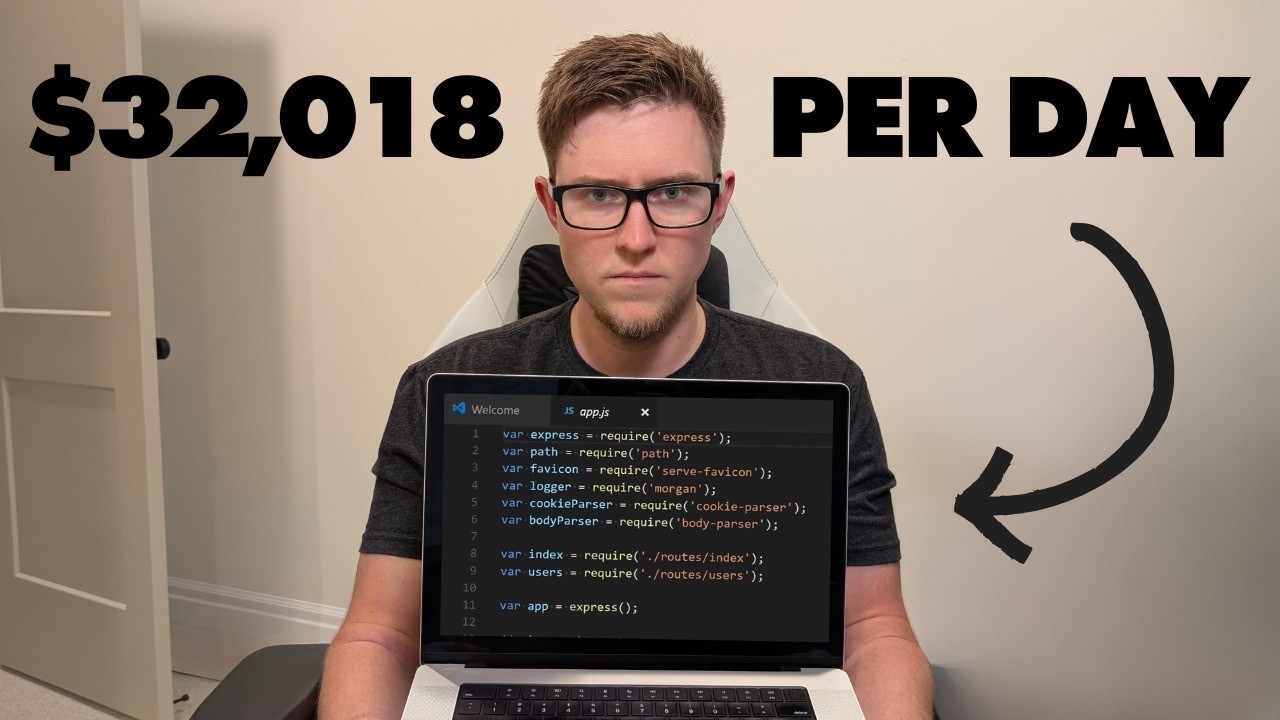
- Grew from $2K to nearly $1 million in monthly revenue with roughly 30,000 daily active users.
- Reached 25,332 active paying members at the time of discussion.
- Background and origin story
-
Products and Offerings
- Core product(s) and what each one does
- boot.dev is an interactive, coding-first online learning platform for software engineers.
- Emphasizes “unsandboxing” the experience so learners perform tasks close to real-world engineering work.
- All content is free, but interactivity is limited for non-paying members after a certain point.
- Supporting tools, side projects, or experiments mentioned
- No additional side projects or tools beyond core product and analytics/marketing integrations are described.
- Core product(s) and what each one does
-
Metrics and Financials
- Revenue figures, user counts, and financial milestones
- Nearly $1 million in monthly revenue at the time of discussion.
- 2024 total revenue was $5.7 million.
- 25,332 active paying members.
- Software costs and resource efficiency
- Cost of goods sold for 2024 was $300K.
- Spent approximately $600K–$700K on salaries and full-time contractors.
- Exit or acquisition specifics (if explicitly stated)
- No exit or acquisition discussed.
- Revenue figures, user counts, and financial milestones
-
Strategy and Growth
- Overall vision and positioning
- Target back-end learners underserved by existing platforms and differentiate through unique, interactive experiences.
- Primary growth engine or method
- Early growth driven by blogging; later growth powered by influencer collaborations and YouTube partnerships.
- Key tactics, channels, or strategic steps
- Collaborated with Free Code Camp on 8-hour courses to build trust and reach.
- Prioritized working with gaming-focused YouTube creators to tap into high-affinity audiences.
- Made collaboration easy for influencers by supplying B-roll and minimizing their workload.
- Focused tightly on product-market fit before scaling marketing spend.
- Overall vision and positioning
-
Tech Stack and Infrastructure
- Tools, platforms, and technical approaches referenced
- Back end built with Golang; database is PostgreSQL.
- Hosted on Google Cloud with Cloudflare; uses Kubernetes and Docker.
- Front end uses Vue, Nuxt, JavaScript, and TypeScript.
- Analytics via Post Hog; email via SendGrid API; payments via Stripe.
- Notable technical decisions, trade-offs, or architecture choices
- Chose Post Hog for cost-effective, developer-friendly product analytics.
- Integrated Send Grid to consolidate email tooling and reduce vendor count.
- Tools, platforms, and technical approaches referenced
-
Lessons and Advice
- Direct advice given to other founders
- Avoid copying competitor sites; pursue distinct differentiation instead.
- Treat MVPs as minimum quantity, not minimum quality.
- Tightly scope product focus and avoid serving multiple customer personas early on.
- Prioritize product quality and problem-solving before heavy marketing investment.
- Make influencer collaborations easy by handling B-roll and logistics.
- Hard-won insights and key takeaways
- Balance learning and action; avoid treating business education as purely a content consumption phase.
- Build hard skills directly relevant to the business rather than delegating them too early.
- Direct advice given to other founders