-
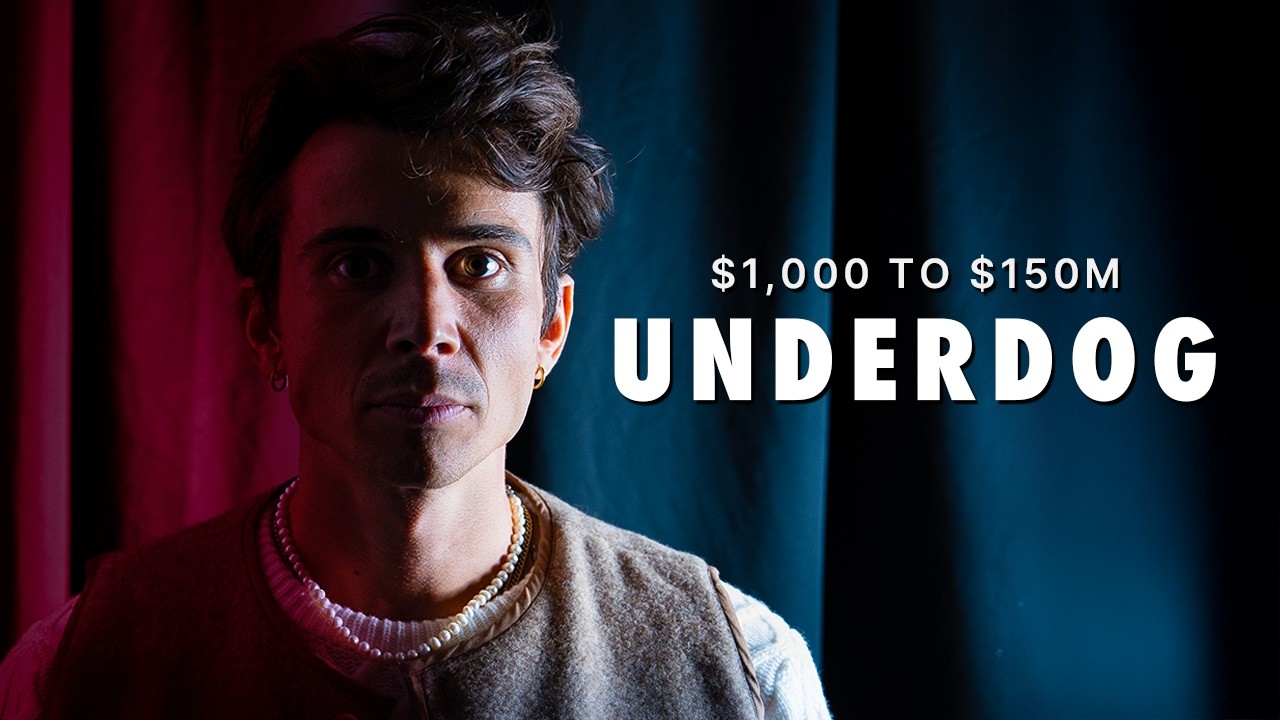
Guam Mubes
- Background and origin story
- Known as Gam, grew up in Paris, parents were non-entrepreneurs from a farm in southwest France with little money, sacrificed to fund his education.
- Worked low-wage jobs through university, was rejected from McDonald’s while friends were accepted, leading to deep self-doubt.
- Earned a master’s in marketing, launched a t-shirt business with his dad (no upfront capital needed), which failed after selling only 6 shirts, straining his relationship with his dad for 1.5 years.
- Joined a friend’s lead generation agency, became an expert in sales prospecting by booking meetings for tens of companies across industries over 1 year.
- Left the agency to build scalable software, moved to Russia to hire junior developers, spent $4–5k (all his savings) on a LinkedIn profile personalization project that failed when one line of code broke the entire build.
- Returned to France with only $1,000 left, relied on his girlfriend to pay rent, faced doubt from friends and family, lied about being busy to avoid socializing due to lack of funds.
- Pivotal moments and turning points
- Pivoted from unproven “blue ocean” ideas to “red ocean” markets with existing demand, deciding to improve on competitor offerings rather than build net-new categories.
- Launched lemlist’s MVP in 2 weeks, closed the first 100 customers via live demos and outbound sales.
- Offered to write campaigns for early customers in exchange for paid subscriptions and permission to feature them as success stories.
- Identified a 15% activation rate (users launching campaigns post-signup), rebuilt the entire product from scratch, faced angry customer feedback, saw growth drop to 0% that month, but activation rose to 35% and growth hit 60% the following month.
- Two co-founders exited the company, forcing him to handle all technical, product, sales, and marketing functions alone.
- Spent 1.5 years rebuilding lemlist’s entire architecture to support scale after plateauing at $10M ARR.
- Identified “magnet Persona” (sales reps) as the core user group that drove retention and word-of-mouth, repositioning lemlist as the go-to sales tool for sales teams.
- Business growth and current status
- Narrator notes he grew his last $11,000 into a company valued at over $150M in 4 years; Guam states he had only $1,000 in personal savings when starting lemlist.
- lemlist hit $250k ARR in year 1, $1M in year 2, ~$8M in year 3, and $10M ARR at 3.5 years before plateauing.
- Current metrics: $30M ARR, $10M EBITDA, ~100 employees, customers in 100+ countries.
- Has 10 years of total entrepreneurship experience across all ventures.
- Background and origin story
-
Products and Offerings
- Core product: lemlist
- Sales prospecting and personalization tool focused on making sales more human with extra personalization layers competitors lacked.
- Ties value directly to user revenue by helping teams book more meetings.
- Failed experiments and side projects
- T-shirt business with his dad: sold only 6 shirts, failed to gain traction.
- LinkedIn profile personalization project: aimed to personalize the internet by showing visitor identities on any website, failed when one line of code broke the build after spending $4–5k on junior developers in Russia.
- Lead generation agency: worked for 1 year booking meetings for global clients, became an expert in sales prospecting.
- Core product: lemlist
-
Metrics and Financials
- Revenue and financial milestones
- lemlist first month revenue: $600.
- Year 1 ARR: $250k; Year 2 ARR: $1M; Year 3 ARR: ~$8M; 3.5-year ARR: $10M; current ARR: $30M.
- Current EBITDA: $10M.
- Company valuation: Over $150M.
- User and growth metrics
- First 100 customers acquired via live demos and outbound sales.
- Initial activation rate (users launching campaigns): 15%; post-rebuild activation: 35%.
- Initial growth rate: 40% month-over-month, dropped to 0% during product rebuild, hit 60% the following month, later sustained 15–25% month-over-month growth.
- Customers in 100+ countries.
- Costs and resource efficiency
- Spent $4–5k total on Russian developers for the LinkedIn personalization project (all his savings at the time).
- Started lemlist with $1,000 remaining in personal savings.
- Team size: ~100 employees currently.
- Revenue and financial milestones
-
Strategy and Growth
- Vision and positioning
- Initial ambition: Personalize the entire internet via visitor identity tracking.
- Pivoted to focus on red ocean markets (proven demand) with lemlist, improving on competitor offerings rather than building unproven blue ocean ideas.
- Positioned lemlist as the dedicated sales tool for sales teams via the “magnet Persona” strategy.
- Primary growth engine
- Content and community feedback loop: Use the product daily, create educational content and success stories, gather feedback from the user community, iterate on the product, repeat.
- Early growth driven by outbound sales, live demos, and direct customer support (writing campaigns for early users in exchange for subscriptions).
- Key tactics
- Tied product value directly to user revenue (number of meetings booked) to associate lemlist with customer success.
- Talked directly to unhappy customers via Zoom calls to diagnose and fix product issues during the rebuild.
- Identified “magnet Persona” (sales reps): users who never churn and attract other customers, as sales reps are the revenue drivers for most companies.
- Optimized for activation rate (users launching campaigns post-signup) as a core growth lever.
- Vision and positioning
-
Tech Stack and Infrastructure
- Early technical decisions
- Hired junior developers in Russia to build the LinkedIn personalization project at a total cost of $4–5k, project failed due to a single line of code change breaking the build.
- lemlist technical architecture
- First MVP built in 2 weeks to ship quickly.
- Initially coded quickly to ship features fast, leading to technical debt that required a full 1.5-year architecture rebuild to support scale after hitting $10M ARR.
- Handled all technical functions personally after two co-founders exited the company.
- Early technical decisions
-
Lessons and Advice
- Direct advice to founders
- Be patient with results, but impatient with action: put yourself out there, document your journey, never give up, and believe in yourself.
- Always invest in yourself (new jobs, experiences, conferences, events, learning opportunities) — optimize for learning, as you cannot control outcomes.
- Work on your own skills and growth harder than any other area of your business.
- Take action: unstarted ideas have a 0% chance of succeeding, so start even if your idea, skills, or timing are imperfect.
- Focus on substance: who you become, who you help, and your values, rather than material goods or status.
- Hard-won insights
- True product-market fit feels effortless (“like magic”) but growth follows an S-curve, not a straight exponential — plan for the next S-curve to avoid plateaus.
- Using your own product daily drives 100x faster improvement, as you experience bugs and pain points firsthand.
- Activation rate is a critical early metric: track whether users take core actions (e.g., launching a campaign) post-signup.
- SaaS success depends on retention: identify your “magnet Persona” (users who don’t churn and attract others) to drive sustainable growth.
- Rebuilding core architecture is often necessary to scale past early growth plateaus.
- Family sacrifices matter: helping parents achieve financial security is a top reward of entrepreneurial success.
- Money does not change your core values — focus on who you become, not what you can buy.
- Direct advice to founders