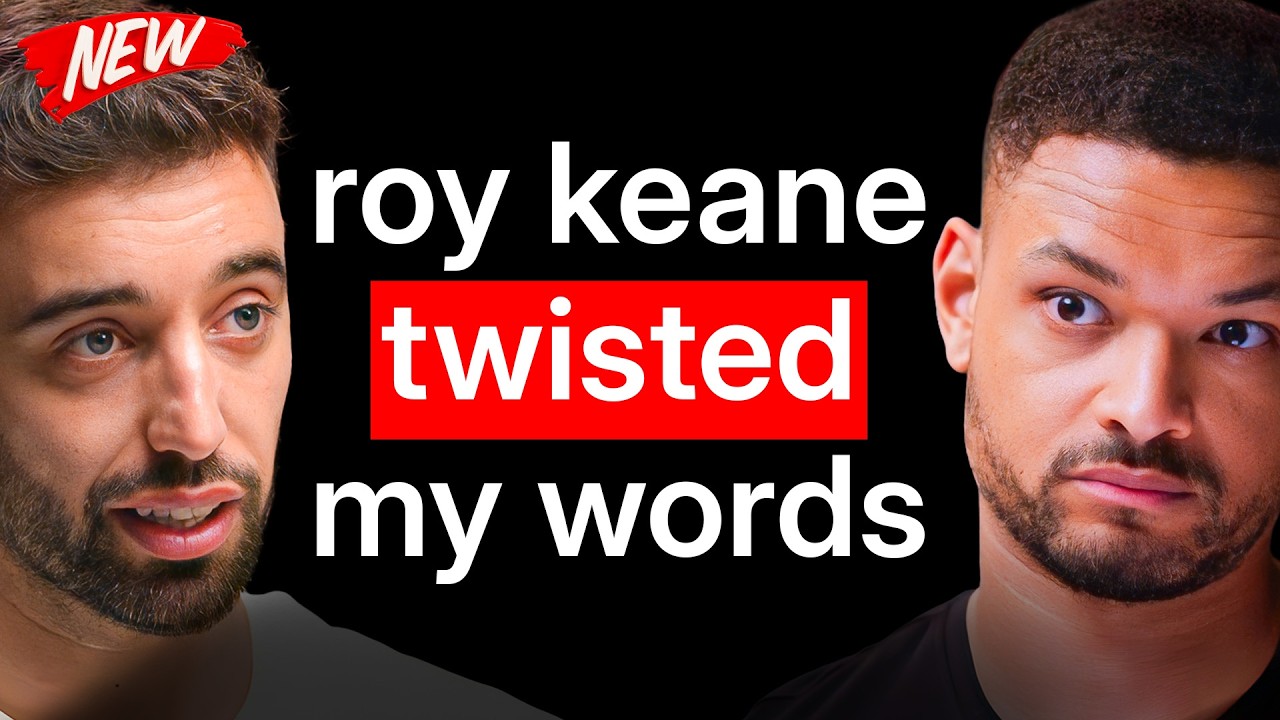
Bruno Fernandes is Manchester United’s captain and arguably their greatest player in the post-Ferguson era, with more assists than any Premier League player since his arrival, 70 league goals, and a record five Matt Busby Player of the Year awards. This episode explores the values, loyalty, and mentality that have defined his career, his decision to reject a reported £200 million offer to leave the club, his response to criticism from Roy Keane, and his vision for Manchester United’s future under Michael Carrick.
The Foundation: Family and Upbringing in Porto
Bruno traces everything back to his parents and the values they instilled in him growing up in Porto, Portugal.
His father never lectured or showed overt affection but taught by example, modeling sacrifice, discipline, and relentless standards.
Even after Bruno scored two or three goals, his father would focus on the bad moments, reinforcing that there is always room for improvement.
He pushed Bruno to never settle for 98% effort, teaching him to go “full” in everything he does.
His mother provided the emotional warmth and love his father expressed differently.
Bruno’s mother worked cleaning houses, which shaped how he treats every person around him, from teammates to cleaners and kitchen staff.
He insists on respect and care for everyone at the club as a non-negotiable, treating the cleaner the same way he treats the CEO.
He credits this upbringing for his ability to handle criticism at one of the most scrutinized clubs in the world without it changing who he is.
Early Career: Fearlessness and Rapid Ascent
Bruno started playing football at age five at FC Infesta and was moved to play with seven-year-olds after just one training session because he stood out.
He was never the most technically gifted, fastest, tallest, or strongest, but he had no fear.
He would sprint against quicker players, tackle bigger opponents, and compete without hesitation.
His aggression was so intense that referees sometimes asked his coach to substitute him to avoid a red card.
He moved to Boavista after about a year, then to Novara in Italy at 17, where he was promoted to the first team within three months.
At Udinese, manager Francesco Guidolin became a father figure who gave Bruno the foundation to be fearless and express himself.
Bruno was nearly sent on loan to Watford, but Guidolin called him back, telling him he loved his attitude and believed he would succeed.
Guidolin taught young players to stay calm and trust the process rather than demanding immediate playing time.
The Dream of Manchester United
Bruno grew up watching Cristiano Ronaldo play for Manchester United and dreamed of playing in the Premier League, which he considers the best and most competitive league in the world.
Tottenham came close to signing him from Sporting in a deal that collapsed on the final day of the transfer window when Sporting refused to sell.
In January 2020, his agent called to say Manchester United had an agreement with Sporting and the decision was his.
Bruno was in his wardrobe getting ready for bed, his wife had just put their daughter to sleep.
He cried silently on the call, not wanting his voice to break, and his wife asked why he was crying.
He called his agent back and said, “I don’t even want to know anything else. Just tell them I’m going.”
He describes the signing as the cherry on top of the cake, the moment his dream came true, and says the same smile and desire to win are still with him today.
Choosing Manchester United Despite Instability
When Bruno joined in 2020, Manchester United was seventh in the Premier League, cycling through managers after Sir Alex Ferguson’s departure, and in a period of turbulence.
He watched them lose to Burnley at home just days before signing and still believed in the team’s potential.
He didn’t see himself as the “magic powder” to fix everything but believed he could bring his values and help build something great.
He acknowledges it has taken longer than he hoped but says his dreams for the club are still alive.
Culture and Respect at the Club
Bruno emphasizes that respect for every person at the club, from physios to stewards to kitchen staff, is non-negotiable.
He treats everyone the same, greeting cleaners and front desk staff with the same warmth as teammates.
He draws a parallel to Johnny Ive’s philosophy that you may not be able to point to care directly, but everyone can feel when someone didn’t care.
He connects this to his mother’s experience as a cleaner and his determination that no one in his household or workplace is treated as lesser.
He believes the club’s post-Fergusion recruitment mistakes were not just about player quality but about constantly changing managerial strategies, which meant players bought for one system didn’t fit the next.
He argues recruitment must prioritize players who fit Manchester United’s identity, not just any manager’s system, because players get five-year contracts while managers last two.
He cites Pep Guardiola and Manchester City as a model where the club and manager chose players together to fit a long-term system.
He notes that the social media distractions and public complaints from players and their families that plagued the club in recent years have largely disappeared.
He believes this is partly because the club has set clearer expectations and partly because the right character profiles have been brought in.
Bruno himself has told his parents, brother, and sister never to speak publicly on his behalf without his knowledge, because they may not understand the repercussions.
Leadership and Relationship with Managers
Bruno has played under six managers at Manchester United and says he has supported every one of them publicly.
He never goes home and complains about managers to his family or seeks to have people post positive things about him on social media.
He makes himself available for whatever each manager wants, even if he personally disagrees, and saves his opinions for private conversations when asked.
He has learned to communicate with different players in different ways but demands the same standards from everyone.
He shouts at teammates not out of anger but because he believes in them, and he tells them that the day he stops talking to them is the day he has given up on them.
He praises players when they need it to reach the next level but makes clear he expects more.
Michael Carrick and the Path Forward
Michael Carrick was announced as Manchester United’s manager going forward during the recording of this episode.
Bruno describes Carrick as calm, clear in his demands, and someone who gives players responsibility to make decisions on the pitch.
Carrick provides the foundation, base principles, and non-negotiable rules but then lets players read the game and adapt when the opponent does something unexpected.
He gives freedom with the ball because he cannot tell a player where to pass or shoot in the moment, but he ensures they know where spaces will be.
Since Carrick took charge, Manchester United have earned more points than any other Premier League club.
Bruno believes Carrick knows the club’s values better than anyone, having served as a player, assistant manager, and now manager, and has the character to lead Manchester United.
For the club to continue improving, recruitment must bring in the right characters, not just the best players, and reinforce areas like replacing Casemiro.
Risk, Reward, and Playing Style
Bruno plays as a number 10 who takes risks with passes that other players might not attempt, which means he loses the ball more often but also creates more chances than almost anyone in the league.
He sees it as a risk-reward balance: he might miss two or three risky passes, but if one leads to a goal, it is worth it.
He argues every team needs players who take risks, just as wingers lose the ball in one-on-ones and fullbacks attempt more crosses than center-backs.
Eric ten Hag once showed him data on his shooting success rates from different positions and encouraged him to take more shots from closer range where his conversion rate was higher, but Bruno still values the occasional long-range strike.
His most effective area is the central zone between the opposition’s midfield and defense, where he can receive, turn, and play forward passes, though he is willing to play anywhere the manager asks.
What is non-negotiable regardless of position is his commitment, running, fighting, and team spirit.
Durability and Training Philosophy
Bruno appears to never get tired or injured, but he admits he does both.
He attributes his durability partly to good genetics but mostly to training at 100% intensity every session, treating training like a match.
He does extra shooting and passing drills when he is already tired so that his brain and body learn to perform under fatigue.
He believes this is why he can still make decisive runs and passes in the 89th minute of games.
Becoming Captain
When Erik ten Hag offered Bruno the captain’s armband, replacing Harry Maguire, Bruno’s first thought was gratitude, and his second was concern for how Harry would react.
He went straight to Harry before accepting, and Harry told him that if anyone deserved it, it was Bruno, which confirmed to Bruno that he was doing things right.
Bruno made clear to Harry that losing the armband did not change his status as a leader, and he still consults Harry on team decisions.
Record-Breaking Season and Individual Awards
In the season discussed, Bruno made 34 appearances, scored eight goals, recorded 20 assists, won 12 Player of the Match awards (the most in the Premier League), and earned six Player of the Month awards.
He joined Thierry Henry and Kevin De Bruyne as the only players to reach 20 assists in a Premier League season.
He won the Matt Busby Player of the Year award for a record fifth time.
Bruno says the individual recognition is a byproduct of the team performing better and that his style of play has not changed since he arrived in the Premier League.
Responding to Roy Keane’s Criticism
Roy Keane criticized Bruno’s mentality based on a quote he claimed Bruno said, suggesting Bruno was chasing individual assist stats.
Bruno says Keane got the quote completely backwards: Bruno was being self-critical, saying he should have passed instead of shot because he wanted the best for the team.
Bruno accepts criticism and never responds to it, but draws the line at people lying about what he said.
He asked Ole Gunnar Solskjær for Keane’s number to text him and say he didn’t mind the criticism but didn’t appreciate words being put in his mouth.
He emphasizes that he has never once said he wanted to be the best player in the Premier League or chase any individual record; his only stated goals are winning the Premier League and Champions League with Manchester United.
What Teammates Say About Bruno
The host played voice notes from several former and current teammates describing Bruno:
They consistently spoke about him as a person first, highlighting his caring nature, compassion, support, and the way he lifts others.
They described him as someone who makes people around him better without trying, who demands the right things at the right times, and who is a world-class footballer and an even better human being.
Bruno became emotional hearing these, saying that what stays with you at the end of a career is how you behaved as a person, not just how good a player you were.
Rejecting the £200 Million Offer
Bruno confirmed he received a massive financial offer, reportedly worth up to £200 million, to leave Manchester United for the Middle East.
He chose to stay because he has not yet fulfilled his dreams at the club: winning the Premier League and the Champions League.
His wife, whom he has been with since they were 16, was the first person he spoke to when the offer came in while he was on a postseason tour in Hong Kong.
She asked him whether he had achieved everything he wanted in his career and whether this was the right next step.
She has supported his dream since he was 17, leaving her own life behind to follow him to Italy on a modest salary, and she always has a say in major decisions.
Bruno says his family is his number one priority because they have stood by him through every up and down, seeing his good and bad sides, and never wavered.
He became emotional discussing this, acknowledging that loyalty and family are the most important things in his life.
Closing Question: Five Years from Now
Asked what would need to happen for the next five years to be a huge success, Bruno said:
Winning the Premier League and the Champions League with Manchester United and restoring the club to where it belongs.
On the international stage, winning the World Cup with Portugal, which he calls his biggest career goal because it would represent his nation, his family, and a country that is small in size but big in quality, love, and fearlessness.