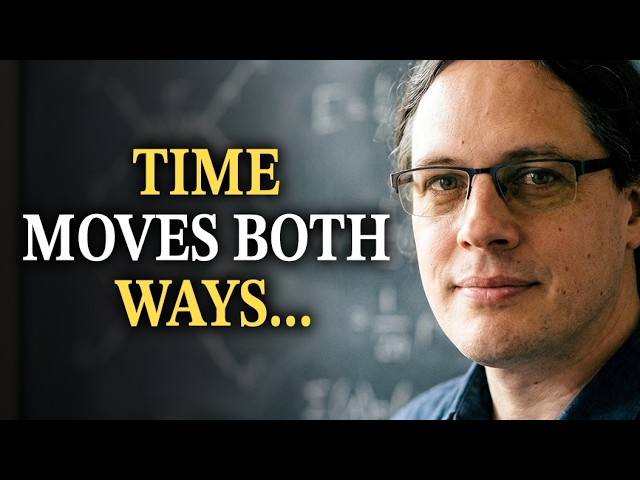
David Wallace, a philosopher of physics at the University of Pittsburgh, is one of the leading defenders of the Everett (Many-Worlds) interpretation of quantum mechanics. In this episode, he explains why the theory is more conservative than it appears, how probability works in a deterministic multiverse, why the direction of time remains physics’ deepest mystery, and how emergence allows higher-level patterns—from fluids to people—to be just as real as the microscopic physics underlying them.
Physics Is Simpler Than You Think
Physics studies far simpler systems than biology, economics, or neuroscience—things like single atoms or crystals—which is why physicists have achieved extraordinary precision (e.g., measuring the electron’s magnetic moment to 10 significant figures) while social scientists struggle to predict human behavior better than chance.
The perception of difficulty comes from the sophisticated mathematical tools required and from the fact that physics describes regimes far removed from everyday intuition, not from the complexity of the systems themselves.
Richard Feynman’s famous remark that “no one understands quantum mechanics” refers specifically to the measurement problem and quantum weirdness, not to physics broadly—we understand many physical systems (superfluids, nuclear structure, stellar physics) with remarkable completeness.
The Deepest Mystery: Why Time Has a Direction
Microscopic physics treats past and future identically—the fundamental equations are time-symmetric—yet our macroscopic world manifestly distinguishes them (eggs break but don’t reassemble, heat flows from hot to cold).
The standard partial answer is that the early universe had very low entropy (a special boundary condition), which breaks the symmetry, but Wallace argues this is only the beginning of an explanation, not the end.
When physicists actually derive large-scale irreversible dynamics (e.g., viscous fluid equations) from reversible microscopic physics, they do not explicitly insert information about the Big Bang—so how the low-entropy past connects to the asymmetry we observe remains unclear.
Wallace sees this as the greatest unsolved problem in physics: understanding how a time-asymmetric macroscopic world emerges from time-symmetric microscopic laws.
Boundary Conditions and the Structure of Physical Theories
Most of physics follows a general pattern: dynamical laws (evolution equations) plus boundary or initial conditions yield predictions. This framework applies from particle physics to cosmology.
Physicists often constrain initial conditions using principles like energy maximization of entropy or minimization of energy, rather than treating them as arbitrary.
In cosmology, this is harder because we have only one universe, making it philosophically unclear what it means to say the initial conditions “could have been otherwise.”
Inflationary cosmology might help by making the observable universe a small patch of a much larger structure, giving a physical basis for talking about contingency, but this remains speculative.
Quantum Gravity: More Exists Than You Think
The popular framing—that quantum mechanics and general relativity are inconsistent and must be unified—is largely wrong. We already use both together successfully to describe neutron stars, white dwarfs, and falling objects.
The real problem is that our current quantum gravity theories break down at the Planck energy; what we seek is an ultraviolet completion of the low-energy theories we already have.
Wallace distinguishes between covariant quantization (treating gravity as a spin-2 field on flat spacetime, the path that leads toward string theory) and canonical quantization (reformulating general relativity in Hamiltonian form, the path that leads to loop quantum gravity).
The split between these approaches reflects a cultural divide: relativists who love geometric understanding versus particle physicists who love quantum field theory machinery. Wallace is a pluralist about which framework to use.
Everettian Quantum Mechanics: What It Actually Says
The Everett interpretation is not a new theory with extra axioms—it is standard quantum mechanics with the collapse postulate removed. The “many worlds” are not added; they emerge dynamically from the existing mathematics.
The name “Emergent Multiverse” (Wallace’s book title) is chosen deliberately to emphasize that worlds are derivative, not fundamental.
The theory is ontologically conservative: it takes the quantum state at face value, the way classical mechanics takes the phase space point at face value, and treats measurement as just more unitary dynamics rather than a special process.
Wallace differs from Sean Carroll in a subtle but important way: Carroll treats the quantum state (the wave function on Hilbert space) as itself physically real, while Wallace says the quantum state represents physical properties of systems but is not itself the physical reality—just as a classical phase space point represents a system’s properties without being a physical object.
The Probability Problem and the Decision-Theoretic Approach
In Everettian quantum mechanics, every outcome with nonzero amplitude actually occurs in some branch. This raises the question: how can the squared amplitudes (the Born rule weights) function as probabilities if nothing is uncertain and everything happens?
Wallace’s approach, building on David Deutsch’s work, is decision-theoretic: instead of asking whether the weights “really are” probabilities in some metaphysical sense, ask whether a rational agent in an Everettian world would use the squared amplitudes to guide decisions (betting, theory choice, experimental design) in the same way we use probabilities.
The Deutsch-Wallace theorem shows that if you assume the axioms of quantum mechanics (without the Born rule) plus minimal axioms of rational decision theory (ordering of preferences, consistency over time, continuity in Hilbert space), then a rational agent must weight branches by their squared amplitudes—effectively deriving the Born rule from non-probabilistic assumptions.
Wallace emphasizes that the rationality axioms are not extra physical assumptions; they are constitutive of what it means to be a rational agent or scientist at all, and they are needed in any interpretation of quantum mechanics, not just Everett.
Some physicists are untroubled by the probability problem because the branch weights have all the formal properties of probability; philosophers tend to be more concerned about the conceptual connection to scientific inference.
What Counts as a “World”?
A world, in the Everett picture, is a dynamically autonomous branch—a component of the quantum state that evolves independently because decoherence has suppressed interference with other branches.
This is not a sharp, binary distinction. Decoherence is never perfect; there is always a tiny residual interference. Worlds are emergent entities, much like fluids or planets—robust and real for all practical purposes, but not precisely delineated at the fundamental level.
Fundamentally, there is just one quantum state of the universe. “Many worlds” is a description of the emergent, coarse-grained structure of that state, not a claim about fundamental ontology.
Personal Identity Across Branches
When a measurement splits a branch, you can describe it in two equivalent ways: (1) a single three-dimensional person splits into multiple future successors, or (2) a four-dimensional person (extended in time) has multiple divergent future segments.
Wallace regards this as a terminological choice, not a substantive metaphysical disagreement. The underlying physics is the same in both descriptions.
Not every physically conceivable outcome occurs: branches with sufficiently small amplitudes are washed out by interference effects and cannot be defined as coherent emergent entities. A human tunneling through a wall, for example, has such a fantastically small amplitude that no such branch exists in practice.
Emergence: Weak, Strong, and Real Patterns
Weak emergence means higher-level regularities are in principle derivable from microscopic physics, even if in practice we need new concepts and methods to study them. Wallace believes our world is weakly emergent.
Strong emergence means higher-level phenomena are not even in principle derivable from the microphysics—they involve new fundamental laws or properties. Wallace sees no evidence for this, though he acknowledges it is not conceptually incoherent.
An intermediate possibility: macroscopic regularities could be compatible with microscopic physics but inexplicable from it because they are encoded in extraordinarily delicate correlations in the initial state of the universe. Wallace is skeptical of this too, citing the absence of evidence and the success of standard statistical mechanics.
Wallace adopts Daniel Dennett’s concept of “real patterns” to understand emergent ontology: higher-level entities (laptops, fluids, organisms) are real patterns in lower-level physics. “Real” here means the pattern plays a role in successful scientific explanations, not that it is fundamental.
He resists giving a precise definition of “pattern,” arguing that our understanding from actual scientific practice is more reliable than any metaphysical analysis. The pragmatism is in our choice of language, not in the underlying physical structure.
Consciousness
Wallace broadly endorses a Dennettian view: consciousness is real but metaphysically inflated by our intuitions, and there is no clash between consciousness and microphysics. He does not claim originality on this topic and defers to the philosophy of mind literature.
Disagreements with David Deutsch
Wallace and Deutsch agree on the Everett interpretation and the decision-theoretic derivation of the Born rule, but differ on scientific epistemology.
Deutsch is strongly Popperian in his philosophy of science; Wallace is more pluralist, thinking different methodological frameworks capture different aspects of how science works.
The Relevance-Limiting Thesis and Self-Locating Information
The relevance-limiting thesis holds that purely self-locating information (information about where you are in the world, as opposed to what the world is like) should not rationally update your beliefs about non-indexical scientific hypotheses.
Wallace disagrees with this principle. He thinks epistemology must be naturalized—grounded in the actual physical situation of the reasoning agent—rather than derived from abstract, top-down intuitions or thought experiments.
In specific physical contexts, rational agents can and should update on self-locating information. Wallace’s methodological disagreement with philosopher Emily Adlam runs deep: he rejects the “method of cases” (relying on intuitions about thought experiments) as a way to establish general epistemological principles.
Mathematics in Physics
Mathematics in physics is not merely a calculational tool; it plays an irreducible role in explanation. Many physical explanations (e.g., why the electromagnetic coupling runs differently from the QCD coupling) cannot be fully translated into natural language without loss.
Wallace distinguishes his view from Tegmark’s Mathematical Universe hypothesis. Using mathematics to represent the world is not the same as claiming the world is mathematics. The representational role of math does not imply that reality is literally a mathematical structure.
Advice for Young Researchers
Don’t just “shut up and calculate,” but do the calculating. Foundational understanding requires knowing how a theory is actually used in practice—its approximation schemes, heuristics, and connections across subfields—not just its axioms.
Read past the first few chapters of the textbook. The messy, applied parts of physics are where you learn what actually needs to be explained.
If you want an academic career in physics, foundational work alone is not a viable basis; maintain substantial research presence in non-foundational areas as well.
The goal is a thoughtful integration of conceptual and calculational work, not one at the expense of the other.