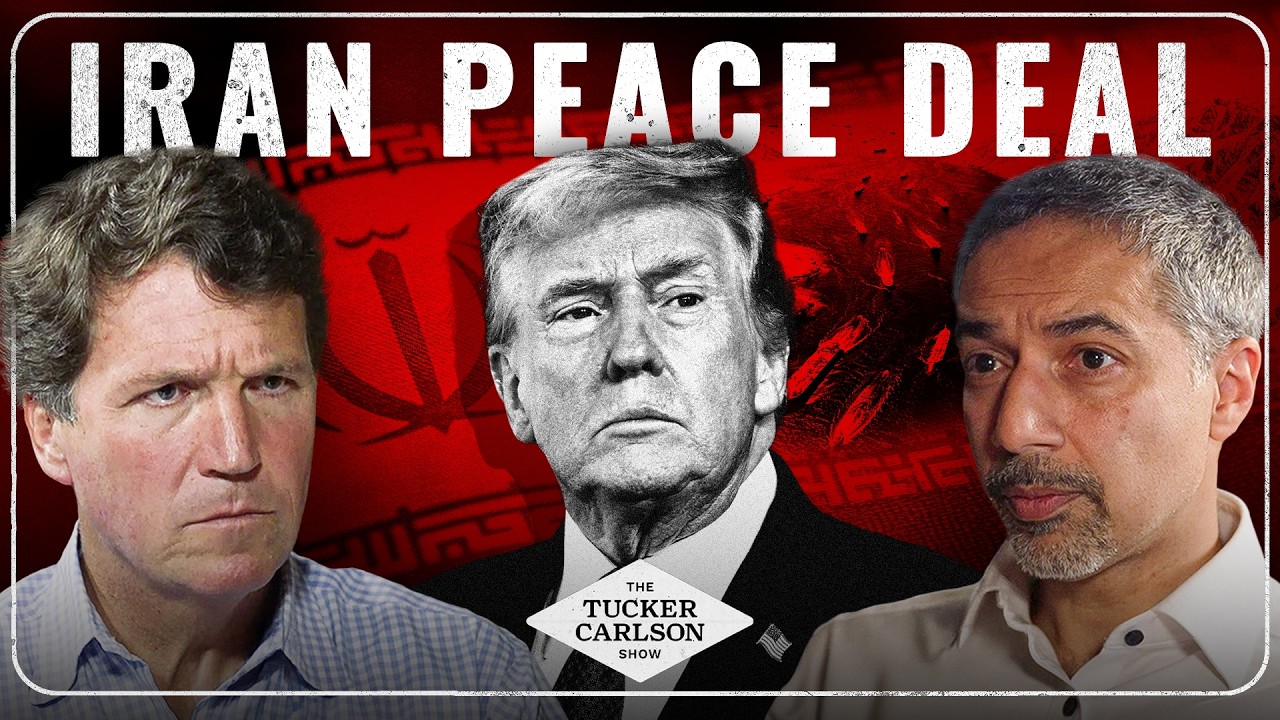
Trita Parsi, an award-winning foreign policy expert and executive vice president of the Quincy Institute, appeared on The Free Press podcast hosted by Bari Weiss to discuss the Iran war, the Trump-brokered peace deal, and Israel’s efforts to sabotage it — and the conversation quickly became a case study in how pro-American, rational analysis of Iran is treated as suspect in mainstream media circles.
Who Trita Parsi Is and Why He Matters
Parsi is one of the most prominent Iran analysts in Washington, a Swedish-Iranian scholar who has spent decades studying U.S.-Iran relations, nuclear diplomacy, and Middle East geopolitics.
He is the author of several well-regarded books, including Treacherous Alliance, which examines the complex triangular relationship between the U.S., Iran, and Israel.
He co-founded the Quincy Institute for Responsible Statecraft, a think tank that advocates for diplomatic engagement over military intervention — a position that puts him at odds with both the neoconservative establishment and the pro-Israel lobbying infrastructure.
Despite being a strong advocate for American interests and a critic of the Iranian regime, Parsi has faced persistent attempts to discredit him, including accusations of being an agent of Iran — accusations that have been thoroughly debunked but continue to circulate.
The Core Argument: A Rational, Pro-American Case for De-escalation
Parsi’s central position is that the U.S. war with Iran was unnecessary, counterproductive, and driven more by Israeli strategic interests than by genuine American security concerns.
He argues that Iran was not an imminent threat to the United States and that diplomatic options had not been exhausted before military action was taken.
His view is explicitly pro-American: he contends that war with Iran serves no U.S. strategic interest, drains American resources, destabilizes a region the U.S. has been trying to pivot away from, and increases the risk of a broader regional conflict that could draw in American forces for years.
This is not an anti-American or pro-Iranian position — it is a realist, interest-based argument that happens to align with what many national security professionals believe but are reluctant to say publicly.
The Trump Peace Deal
Parsi discusses the peace agreement brokered by the Trump administration, which he sees as a positive development that could have ended the conflict on terms favorable to the United States.
The deal reportedly involved Iran agreeing to constraints on its nuclear program and regional activities in exchange for sanctions relief and security guarantees.
Parsi emphasizes that the deal was achievable because it addressed core Iranian security concerns — something previous administrations refused to do, preferring maximalist demands that guaranteed diplomatic failure.
He credits Trump’s transactional approach, whatever its flaws, with cutting through the ideological rigidity that had prevented previous administrations from reaching an agreement.
Israel’s Role in Sabotaging the Deal
A major focus of the episode is Israel’s active efforts to undermine the peace agreement.
Parsi argues that Israel has a long-standing strategic interest in keeping the U.S. and Iran in conflict, because a U.S.-Iran rapprochement would reduce Israel’s leverage over Washington and potentially lead to a more balanced American approach to the region.
He points to specific actions taken by Israel — including intelligence leaks, lobbying efforts in Congress, and possibly direct provocations — designed to collapse the deal and push the U.S. back toward confrontation.
This is not a new pattern: Parsi documents how Israel has historically worked against U.S.-Iran diplomacy, including during the Obama-era JCPOA negotiations, where Israeli lobbying was instrumental in building congressional opposition to the deal.
The implication is stark: a key U.S. ally was actively working against what Parsi argues was a genuine American interest in order to preserve its own regional dominance.
Bari Weiss’s Hostility and the Deportation Question
The conversation on The Free Press took a revealing turn when Weiss and her co-host pressed Parsi in ways that went beyond normal adversarial interviewing.
Weiss appeared frustrated by Parsi’s calm, evidence-based responses and at times seemed to question his right to participate in American policy debates — a line of questioning that implicitly delegitimizes his presence in the discourse.
The episode’s framing — “naturally Bari Weiss tried to get him deported” — suggests that Weiss’s approach crossed from journalism into something more personal and punitive.
This reflects a broader pattern in which analysts who challenge the pro-Israel consensus on Iran are treated not as legitimate policy voices but as enemies to be silenced or removed.
The fact that Parsi is a legal resident who has contributed enormously to American foreign policy discourse makes the deportation framing particularly striking — it reveals how narrow the boundaries of acceptable opinion have become.
What Parsi Expects Next
Parsi warns that the peace deal remains fragile and that opponents — both in Israel and within the U.S. foreign policy establishment — will continue to work to collapse it.
He predicts further provocations designed to reignite hostilities, including potential false-flag operations or exaggerated intelligence claims about Iranian nuclear activities.
He urges the Trump administration to resist pressure from Israel and from hawks in Congress who have already signaled their opposition to the deal.
He also warns that if the deal collapses, the U.S. could find itself in a prolonged conflict with Iran that would make the wars in Iraq and Afghanistan look limited by comparison — a conflict with no clear exit strategy and enormous costs in blood and treasure.
The Broader Implications
The episode is ultimately about more than Iran policy — it is about who gets to define American interests and what happens to those who challenge the prevailing narrative.
Parsi’s experience illustrates the intense pressure faced by anyone who argues that U.S. Middle East policy has been distorted by the influence of a foreign government, even when that argument is made in explicitly pro-American terms.
The fact that a respected scholar with decades of expertise can be treated as a suspect figure simply for advocating diplomacy over war says something troubling about the state of American foreign policy debate.
The episode also raises questions about the role of media figures like Weiss, who position themselves as defenders of free speech and open debate but who, in practice, seem willing to use their platforms to punish dissent from a particular ideological line.